What Is Almond Wood and Why Does It Matter for Pizza?
The fuel behind every Tutte al Forno pizza — and the science of why it shapes the crust.
Almond wood is a dense hardwood that burns long and hot with minimal smoke and a neutral, slightly nutty aroma. It’s favored for professional pizza production because it maintains a consistent high-heat burn — ideal for sustaining the 700–900°F temperatures required for a proper Neapolitan-style crust — without overwhelming the pizza with heavy smoke flavor.
Most wood-fired pizza descriptions stop at “wood-fired.” It’s a phrase that evokes something — heat, flame, craft — without telling you much about what’s actually happening inside the oven. But the wood choice in a wood-fired pizza operation isn’t incidental. It shapes the heat profile, the smoke level, the flavor at the edges of the crust, and how long a fire can sustain consistent production temperature.
At Tutte al Forno, we fire exclusively with hard almond wood. Here’s why, and what it means for the pizza.
The Science of Wood-Fired Heat
A wood-fired pizza oven is not just a hot box. The heat in a professional hearth like our Valoriani units comes from three sources simultaneously:
Direct fire contact and brief, intense radiant bursts
Heat radiating down from the oven’s curved ceiling
Refractory stone absorbs and releases heat into the base
The wood you burn affects all three: burn temperature, burn duration, smoke production, and flavor contribution. Soft woods burn fast, hot, and smoky. Resinous woods — like pine — produce thick, acrid smoke that ruins food. Mixed hardwoods are inconsistent: fine for a backyard firepit, not ideal for a 4-hour catering service that needs stable temperature throughout.
Why Hard Almond Wood Specifically
Almond is a dense, tight-grained hardwood. Its characteristics make it well-suited to sustained professional pizza production:
Long, Stable Burn
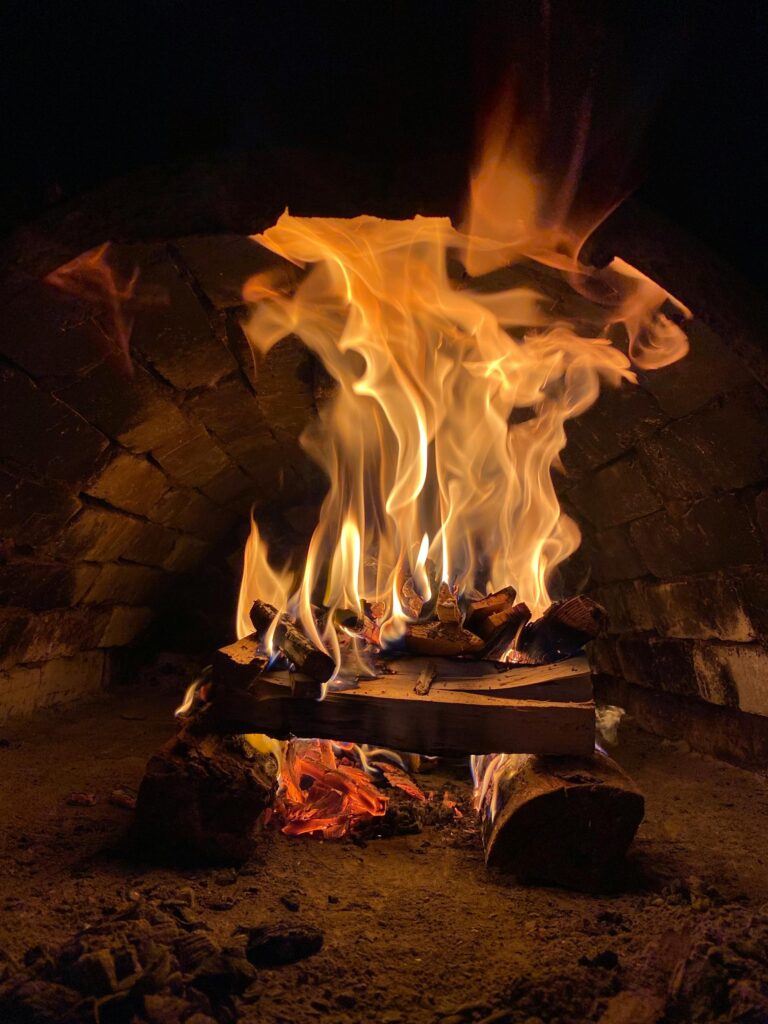
A well-managed almond wood fire holds temperature with fewer reloads than softer hardwoods — critical for 3–4 hours of continuous catering production.
Clean, Low Smoke
Almond produces relatively little smoke once burning properly, so the pizza isn’t overwhelmed by smoke flavor and guests aren’t standing in a smoke cloud.
Neutral, Slightly Nutty Flavor
Unlike cherry or hickory, almond wood contributes a background note that supports the fire without competing with San Marzano tomato, mozzarella, and basil.
High Heat Ceiling
Almond wood can drive a Valoriani oven to 700–900°F and hold it there — the range that produces the charred leopard-spot cornicione.
What This Means for the Crust
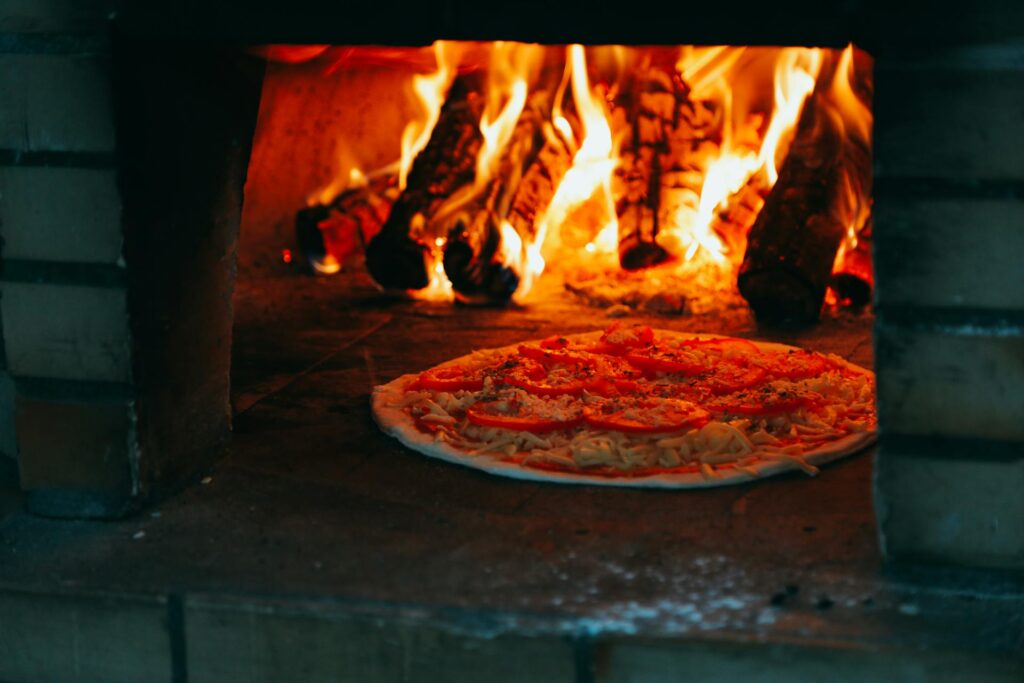
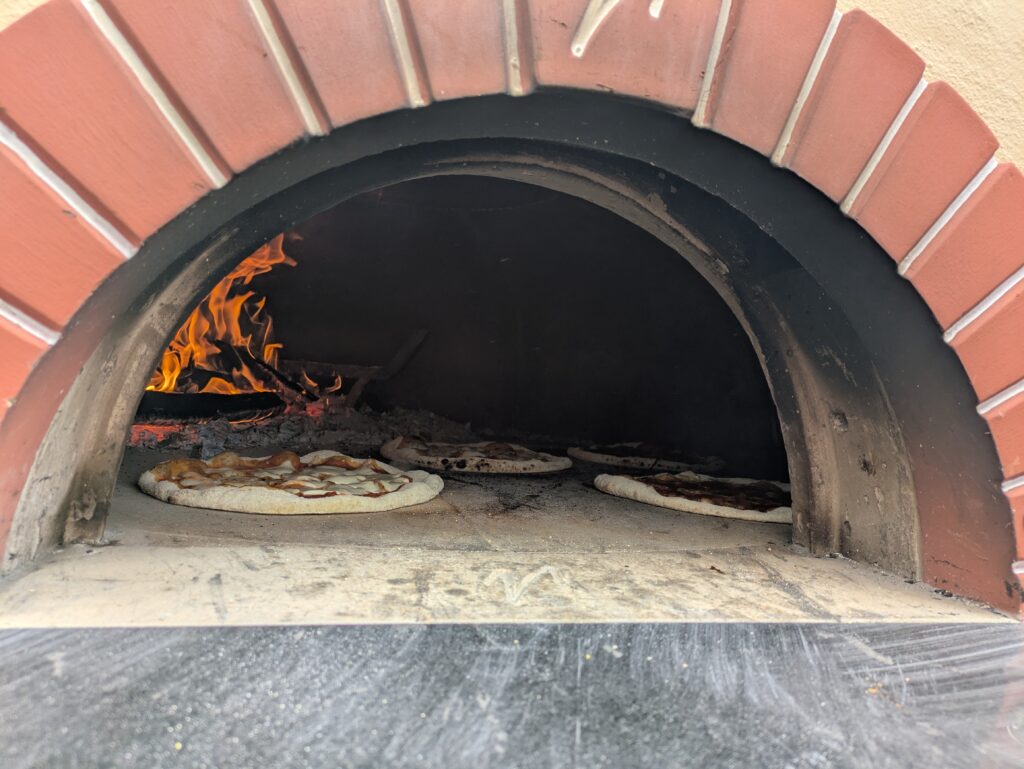
The crust is where wood choice shows up most clearly. At 700–900°F, a personal pizza bakes in approximately 90 seconds. In that window, the base cooks through on contact with the oven floor, the dome heat sets the top and begins to char the edges, and the live flame contributes brief, intense radiant heat that creates the blister pattern on the cornicione.
The result is a thin crust that is simultaneously crisp at the edges, slightly chewy in the center, and charred in spots — not burnt, charred. The distinction matters: burnt is acrid. Char at the right temperature is caramelized, complex, and specific to the wood-fired process.
At lower temperatures — even in high-quality gas-fired ovens — this crust profile isn’t replicable. The bake time increases, the moisture doesn’t flash-evaporate fast enough, and the char pattern doesn’t develop. Wood-fired at proper temperature does something chemically different to dough than any other cooking method.
How We Source and Manage Almond Wood for Events
We use hard almond wood throughout — not a blend, not whatever hardwood is available. For a catering event, the fire is typically lit 60–90 minutes before service begins, bringing the Valoriani oven floor and dome to full operating temperature. A mature almond wood fire in a Valoriani oven holds temperature well; we manage it continuously through service, adding wood as needed to maintain the heat profile.
Almond Wood vs. Gas-Fired Pizza
Gas-fired pizza ovens are consistent, controllable, and capable of excellent pizza. Many of the best pizzerias in Italy and the Bay Area use gas. We’re not making an argument against them — but they produce a fundamentally different result.
| Hard Almond Wood | Gas-Fired | |
|---|---|---|
| Heat source | Live flame + radiant dome + conducted floor | Controlled burner, consistent output |
| Flavor contribution | Neutral, slightly nutty background note | None |
| Crust character | Charred cornicione, complex texture | Even, consistent, less char development |
| Guest experience | Visible flame, aroma, live theater | No visual or aromatic centerpiece |
More practically for catering: gas-fired portable ovens don’t have the visual impact of a live wood fire. The hearth is a social object. Guests gather around it. The smell of almond wood smoke, the visible flame, the sound of the fire — these are part of what Tutte al Forno delivers alongside the pizza itself. A gas burner under a pizza stone doesn’t create the same moment.
Frequently Asked Questions
Can I taste the almond wood in the pizza?
Barely — and intentionally. Almond wood contributes a very light, neutral-to-nutty background note that supports the fire without competing with the pizza’s ingredients. If you want heavy smoke flavor, that’s a different cooking style entirely. Neapolitan wood-fired pizza is about the crust texture and the char, not smoke as a primary flavor.
Is almond wood sustainable?
Almond is a crop wood — a byproduct of orchard management in California’s Central Valley. Using almond wood as fuel repurposes material that would otherwise be chipped or burned as agricultural waste. It’s one of the more locally-sourced and environmentally sensible hardwood choices for California-based wood-fired cooking.
What temperature does a Valoriani oven reach?
At full production temperature, a Valoriani oven fired with hard almond wood reaches 700–900°F. The oven floor holds heat differently than the dome; managing the differential between floor and dome temperature is part of the skill of professional wood-fired pizza production.
Does the wood matter if the oven is good enough?
Yes. A professional oven run on low-quality, inconsistent, or moisture-heavy wood will produce inconsistent results — temperature swings, excessive smoke, and less of the live-fire flavor character that defines the style. Wood quality and oven quality are equally important.
Is wood-fired pizza actually better than gas-fired pizza?
They produce different results — not one better than the other in every context. Wood-fired at proper temperature creates a crust texture and char character that gas cannot replicate. Gas provides more consistency and control. For catering, the live-fire element also serves an experiential purpose that gas simply doesn’t deliver.
Ready to bring the fire to your event?
Submit your event details and our team will be in touch within 24 hours.
Request Your Quote